
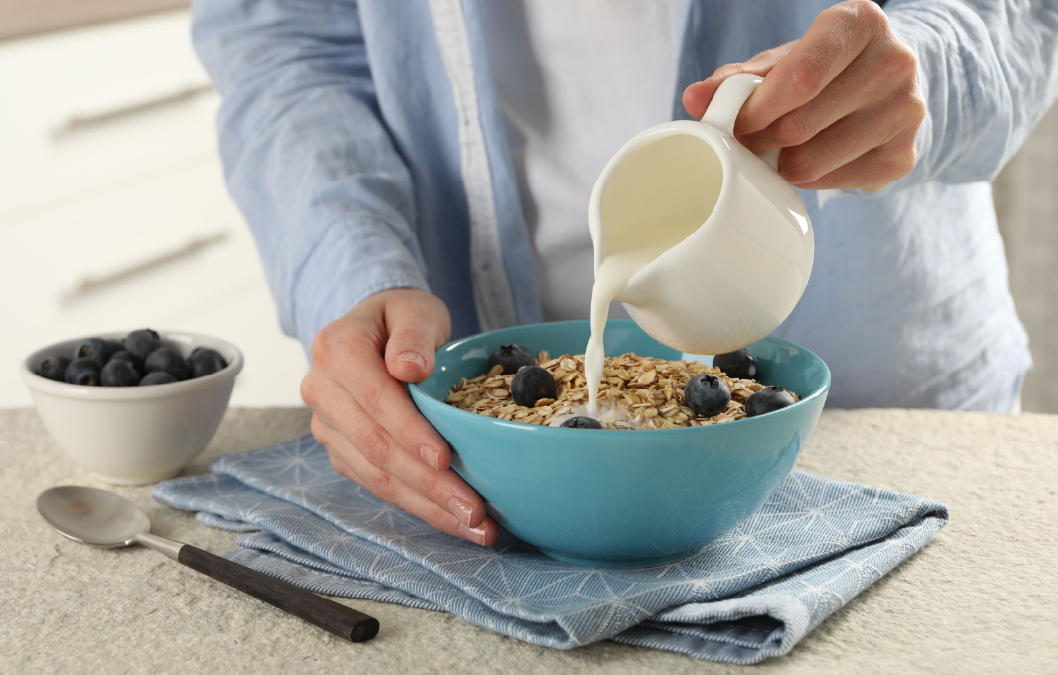
People who are intolerant to lactose often think that they can no longer consume milk, or other dairy products. But that is not the case. Today there is a much higher awareness of the condition of lactose intolerance, and this has led to alternative products being made available which prevent the uncomfortable symptoms a lactose-intolerant person may experience, without compromising on the quality and enjoyment that dairy products bring.

What is lactose intolerance?
A person who is lactose-intolerant is not able to digest lactose – a naturally occurring sugar found in milk – in the same way that most people can. This is because their body does not produce sufficient levels of lactase, which is the enzyme that the body uses to breakdown lactose in the digestive system and turn it into sugars called glucose and galactose. These sugars are easily absorbed into the bloodstream, but a person with a lactose intolerance doesn’t enjoy this benefit in their body and instead can experience stomach pains and bloating of the stomach.
Lactose intolerance can be a temporary thing for some people, but for others it can be permanent and therefore is something they take from childhood into adulthood. There are approximately 3.25 million lactose-intolerant people in the UK, and for some people it can take many years to be diagnosed with the condition. The severity of the side effects can vary from person to person. And while this is not a life-threatening condition, it is uncomfortable and has some serious side effects which need to be managed. These can include stomach cramps, nausea and feeling sick, and so knowing what you can and cannot consume can help relieve these symptoms, and this is where alternative dairy products can be introduced.

Lactose-free milk
There are several alternative milks available, such as oat milk, soya milk, almond milk and coconut milk. Some of these are lactose-free but they can taste very different to standard, fresh milk. The most direct remedy for lactose-intolerant people is drinking lactose-free milk. This has all the taste and nutritional benefits of drinking standard, fresh milk, but has the lactose removed. Essentially, a process is used to add lactase artificially, and which therefore does the job that your body can’t and breaks down the lactose in your body so that it is absorbed by your digestive system.
Lactose-free milk can also be produced as a UHT milk, meaning it has been heat treated to remove bacteria which can deteriorate the quality of the milk once opened. This means the milk is long-life and can be bought and stored in bulk, ready for when you need it. So lactose-free milk is the best alternative milk product for lactose-intolerant people and means milk can be enjoyed in exactly the same way, without experiencing the uncomfortable side effects associated with lactose-intolerance.